Risk-sensitive locomotion and navigation
In preparation
This work uses distributional reinforcement learning, which models the whole distribution of outcomes rather than just the expected return, to learn navigation and locomotion policies for quadruped agents that account for risk directly.
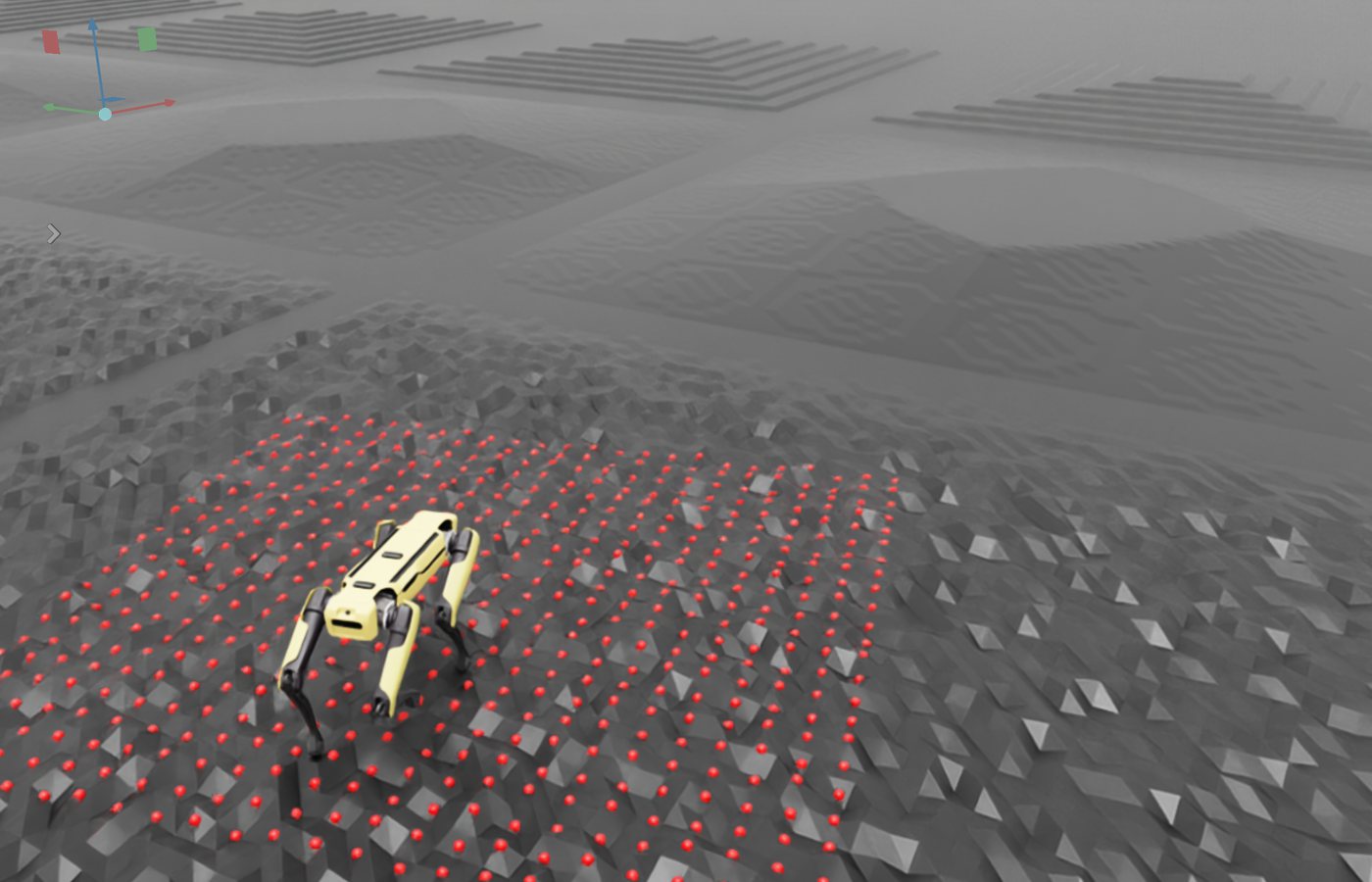
Spot training in Isaac Lab, progressing through a terrain curriculum from stair pyramids to rough ground.
A quadruped sampling terrain around it in simulation while training with distributional reinforcement learning.
Generative occupancy for exploration
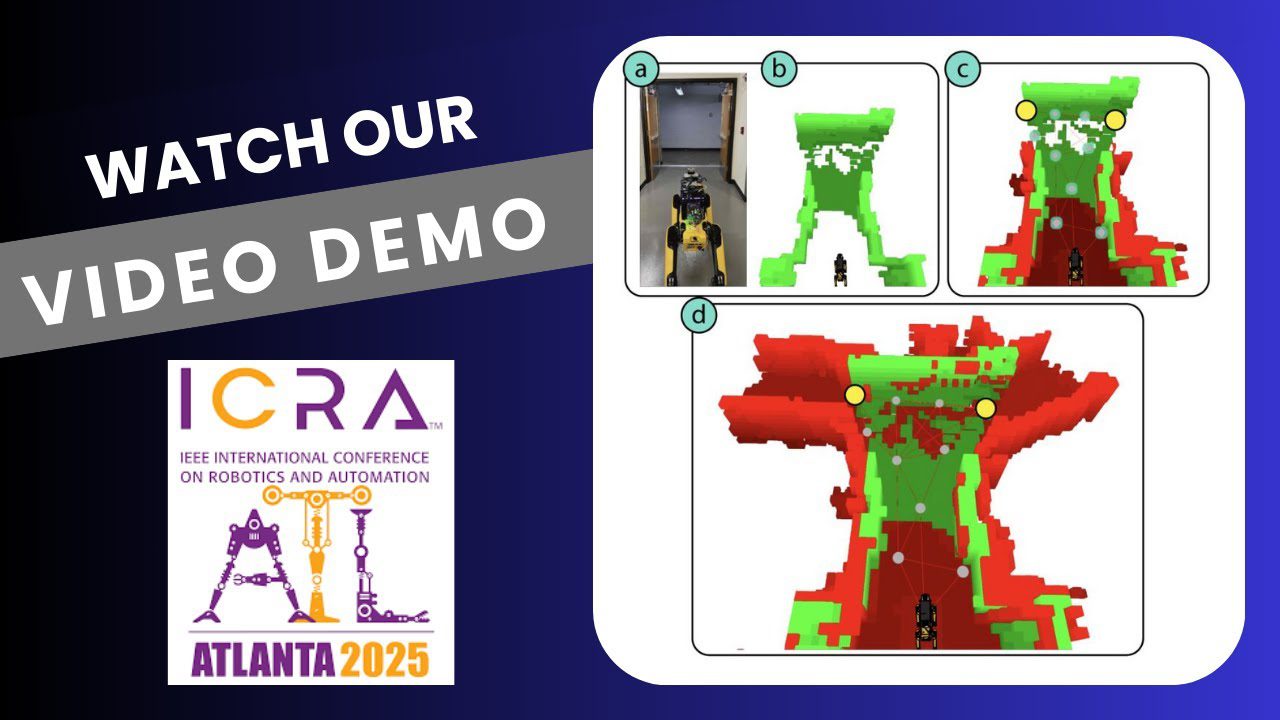
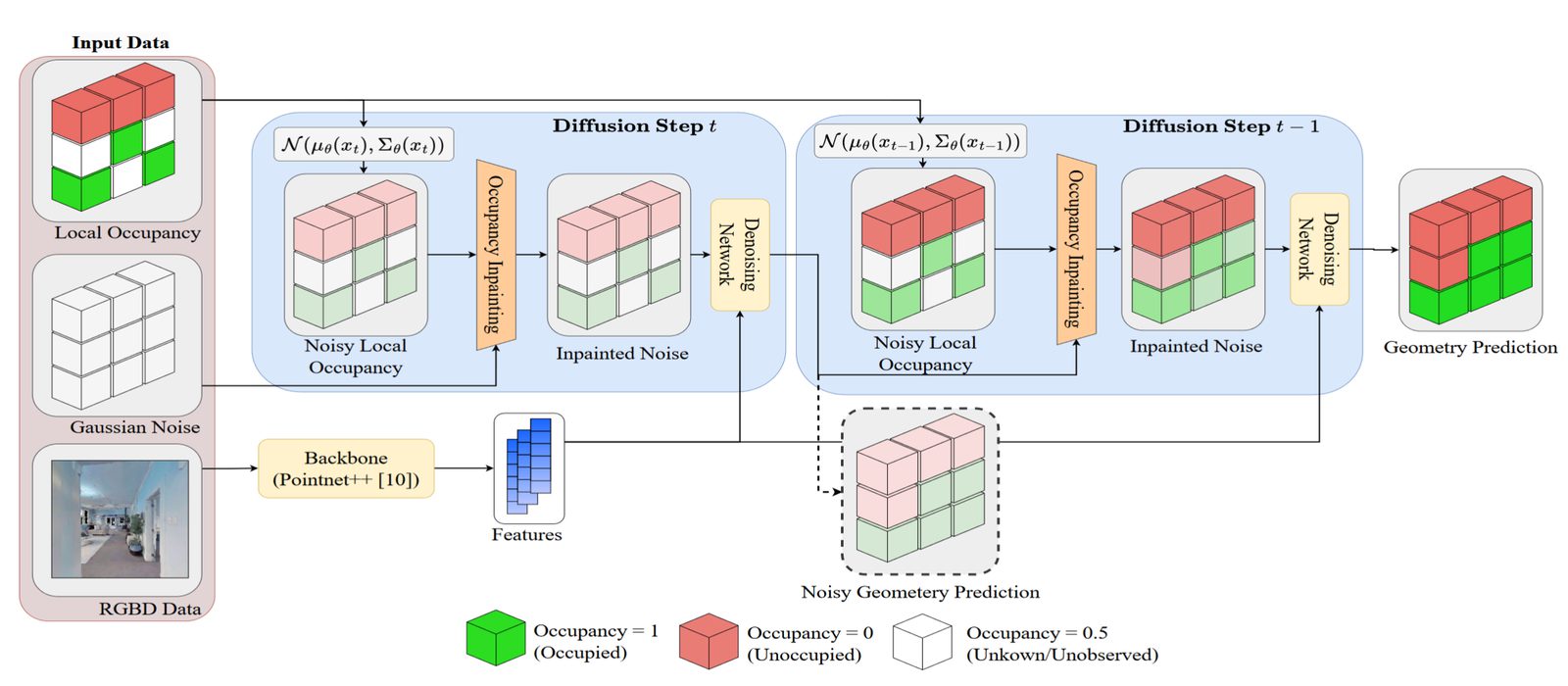
Robots normally plan only over geometry they have directly measured, so they stall when they turn a corner or enter a new room. This thread trains diffusion models to predict the geometry that has not been seen yet, fuses those predictions into a live occupancy map without ever overwriting observed space, and uses the result to keep exploring instead of pausing.
Watch
Generative occupancy mapping running live on a Spot robot.
2:41
IROS2024
SceneSense: Diffusion Models for 3D Occupancy Synthesis from Partial Observation
Multi-agent coordination under communication constraints
When a team of robots explores somewhere the radio does not reach, the hard problem stops being perception and becomes deciding where and when to transmit. This work plans transmission locations from signal strength and payload size, so agents share what they have found without backtracking to meet.
Watch
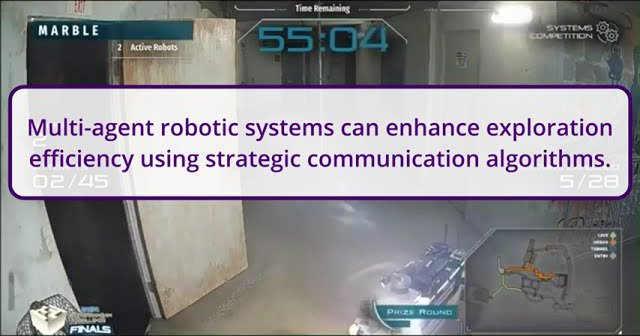
A sixty-second summary of the multi-agent exploration work.
1:00
In review2026
RF-Modulated Adaptive Communication Improves Multi-Agent Robotic Exploration
Lorin Achey, Breanne Crockett, Christoffer Heckman, Bradley Hayes
Across 480+ simulated cave environments, cut distance travelled by up to 58% and exploration time by up to 52%.
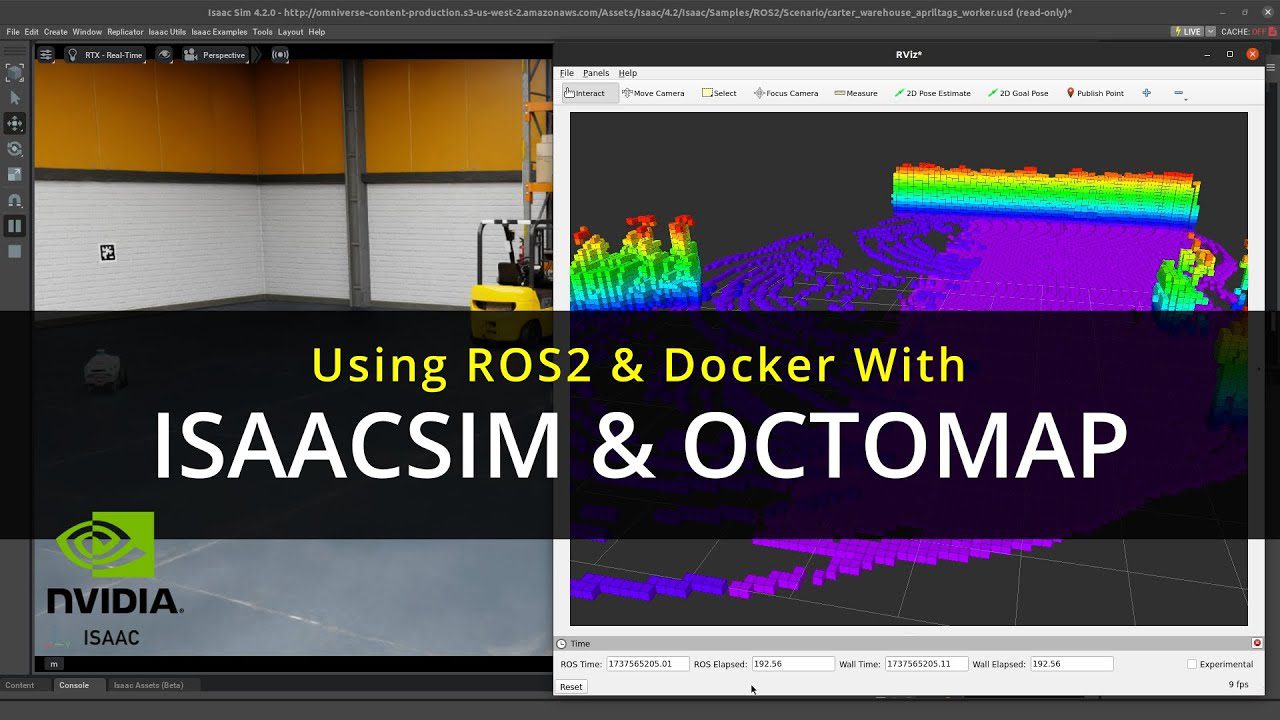
A walkthrough of the simulation setup I use for research: NVIDIA IsaacSim running in Docker alongside ROS2 and Octomap, with a companion repository to clone and run.
A reimplementation of the PaliGemma vision-language model architecture in PyTorch, built end to end to work through multimodal integration and large-model design.
My review of the University of Toronto's four-course Self-Driving Cars Specialization on Coursera, recorded after completing it. The courses cover the autonomy stack end to end: state estimation and localization from GPS/INS, wheel odometry and LiDAR; visual perception with object detection, depth estimation and semantic segmentation; and hierarchical motion planning with vehicle control, ending in a capstone that drives a car through CARLA.